We did not invent a problem. We were fixing it by hand for our clients.
We ran marketing for small Egyptian brands. Good products, real demand, every one of them blocked by software.
We kept fixing the same five things by hand until it was obvious the fix should be a product. What was confirmed is the problem. The product itself still needs a real test: a paid order, and profit from the product itself.
01 / 13
Store
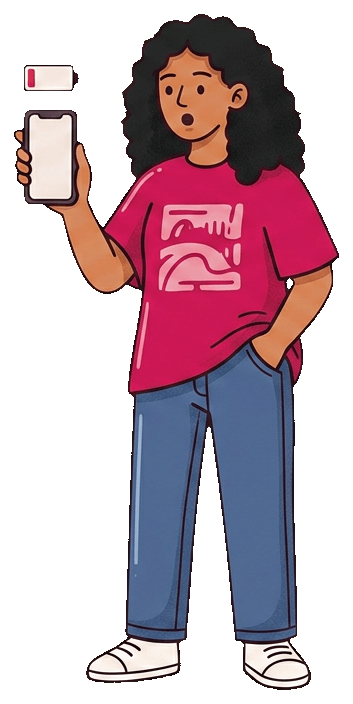
She runs the business from a phone. Every tool assumes she does not.
The business runs on her attention, so when the phone goes dark the business goes dark with it. Every day off has a price she pays quietly.
And a meaningful share of this market never reaches the first screen at all, filtered out by payment plumbing: paying for a store means a card in dollars.
02 / 13
Intelligence
Cash on delivery poisons the pixel, and it does it invisibly.
Cash on delivery is the default here. Standard setups fire the purchase event at checkout, before anything shipped, and a large share of those orders is refused at the door.
So the ad platform optimises toward people who refuse boxes. It is not a bug anyone notices, because the dashboard looks fine. The money leaks through the targeting, every month.
30%
Move the slider to see how the two audiences the ad platform learns from differ.
When the sale fires at checkout
The ad platform learns from everyone, refusals included
20customers counted as a sale
The ad platform learned from 20 customers, including the ones who refused at the door.
When the sale fires at delivery
The ad platform learns only from who actually received it
14customers counted as a sale
The ad platform learned from 14 customers, the ones who actually received it.
Placed and received are separate signals from the beginning. A lookalike audience built on refusals goes looking for more people who refuse.
03 / 13
Store
The store, the intelligence, and the network. One system.
The store: built from her Instagram grid, on her phone, in minutes, in her own identity and not ours.
The intelligence: product copy from her own photos, tracking that separates placed from received, a month that closes with returns in the right one, inventory that survives a return, the customer record before she ships.
The network: one shopper identity across every store, insight drawn from what actually sells around her, and a room of peers she is actually in.
Step 1 of 4
Instagram handle
These are your real products. We'll pull them from this handle.
This is your real account, not a placeholder
04 / 13
Network
The shopper identity belongs to the network, not to one store.
Verified phone, address confirmed once on a map, then one tap on any store in the network. Every store added improves checkout for every other store, so conversion rises for merchants who did nothing.
The same asset runs the other way. Order and return history makes every shipping decision cheaper as the network grows. This is structural. It cannot be copied by adding a feature, only by building a network.
The privacy position, stated before you ask. Decided: a merchant sees a record, never a verdict, and no customer is ever labelled or scored.
store A, first time
Delta
Summer linen dress
1,450 EGP
Delta
store B, also first time
Nova
Running shoes980 EGP
Already known on the network
Your number and address were verified before, at a different store
Nova
The difference
The same thing happens twice. One pays the full first-time cost. The other already paid it somewhere else.
05 / 13
Network
Two problems in this market, and they are the same problem from both ends.
Brands cannot sell as well as they deserve to. Customers do not fully trust local brands, because they have been burned before, and that hesitation is a cost the brand owner pays without ever seeing it.
Trust is the ceiling on the entire category. We sit on both sides of the transaction, which makes us the only party positioned to raise it for everyone at once. That is what turns a store builder into a market.
Simulation
Preparing shipment
YA
Yasmin AlyOrder #1042
890 EGP
Summer dress, size MCash on delivery
From the network order record
This customer refused 3 of her last 4 orders at delivery.
The one order she received was from this same store, last month. The rest came back at the door.
This is data, not an opinion. The decision is yours.
06 / 13
The gap we measured ourselves, not a market estimate.
This is a real sample we researched ourselves, not a top-down slice of a regional number: brands selling through Instagram with no store, and brands with a store whose tracking is lying to them.
The arithmetic is below, with its assumptions. Change them and watch the number move. What we do not know yet is how many of them convert, and at what price, and that is exactly what this funding round is meant to answer.
The gap we measured, first hand
Not a market-size estimate. This is a real sample we researched ourselves, and every assumption below is yours to change.
Numbers from a real sample
The counts below come from a real sample of Egyptian brand accounts we researched ourselves, not from the whole market. What we do not know yet is how many of them convert, and at what price.
The sample: 507 Egyptian brand accounts we discovered and classified ourselves as part of our market research work, 2026.
Brands selling on Instagram with no store
No pixel, no tracking, no ad built on real data.
Source: measured: 329 of 507 Egyptian brand accounts in our own market research sample (2026) had no working online store
8%
Source: assumption, yours to change: not measured in the sample
26brands included
329 x 8% = 26 brands
Brands with a store whose tracking is lying to them
The sale fires at checkout, not at delivery, so the ad platform learns from refusals.
Source: measured: 178 of the same 507 accounts have a live store; whether their tracking is actually broken was not measured
65%
Source: assumption, yours to change: not measured in the sample
116brands included
178 x 65% = 116 brands
Total excluded brands reachable
142brands included
26 + 116 = 142 (sum of the two groups)
This is a count of reachable brands, not a figure in pounds. We do not know the conversion rate or the price yet, and that is exactly what a seed round is for.
07 / 13
Subscription, with the coaching inside it rather than beside it.
Subscription is the revenue model. One consultation a month is a subscriber perk, held outside the app, with extra sessions paid.
Zastoor also operates as a services business today, building and fixing selling systems for small brands. That funds the build and keeps our hands on the real problem. One story, said the same way publicly and here.
The price itself is not set yet, and we would rather leave it open than invent a number here.
08 / 13
Three things changed, and only one of them is technology.
Cash on delivery still dominates here and mainstream tooling still treats it as an afterthought. That single mismatch quietly breaks ad targeting for a whole market.
Selling already moved to the phone. Building for the phone did not.
Turning photos and text into a stocked catalogue is only now cheap enough to be a build instead of a claim. Two years ago the ten minute store was marketing.
09 / 13
Marketing, commerce operations, and the technical build. Most people here have one.
Eight years of marketing and consulting for small Egyptian brands, plus three years building mobile apps at a product company. The insight that cash on delivery poisons a pixel, and therefore poisons every lookalike audience built after it, only shows up when both backgrounds sit in the same person.
What actually shipped: a game app past one hundred thousand downloads, two content management systems live in production for paying clients, and an e-commerce data aggregator that unified the catalogues of three shopping sites into one schema.
An attempt to build Zastoor in 2024 did not reach a working product. What was learned from it is inside what is being built now.
And we have the client relationships that made it obvious in the first place. We are the customer peer, not a vendor talking down at her.
10 / 13
What is actually real, with nothing dressed up.
Paying clients whose blockers are the same blockers this product removes. The problems validated in the field rather than in a survey.
This validates the problem, not the product. Nobody has paid for Zastoor itself yet.
A design system and a merchant application in build, and the demos on this page running against the real components rather than screenshots of them.
11 / 13
We are raising a seed round to reach product-market fit, not to confirm a number we already claimed.
The gap above is one we measured ourselves. What we do not know yet is how many of these brands convert, and at what price. Nobody knows that answer today.
That is precisely what this round is for: launch the product, put it in front of real brand owners, and find the answer from real use rather than a slide assumption.
The amount is not fixed yet. We would rather raise to answer that question than pretend we have already answered it.
 Zastoor


 Summer dress, size MCash on delivery